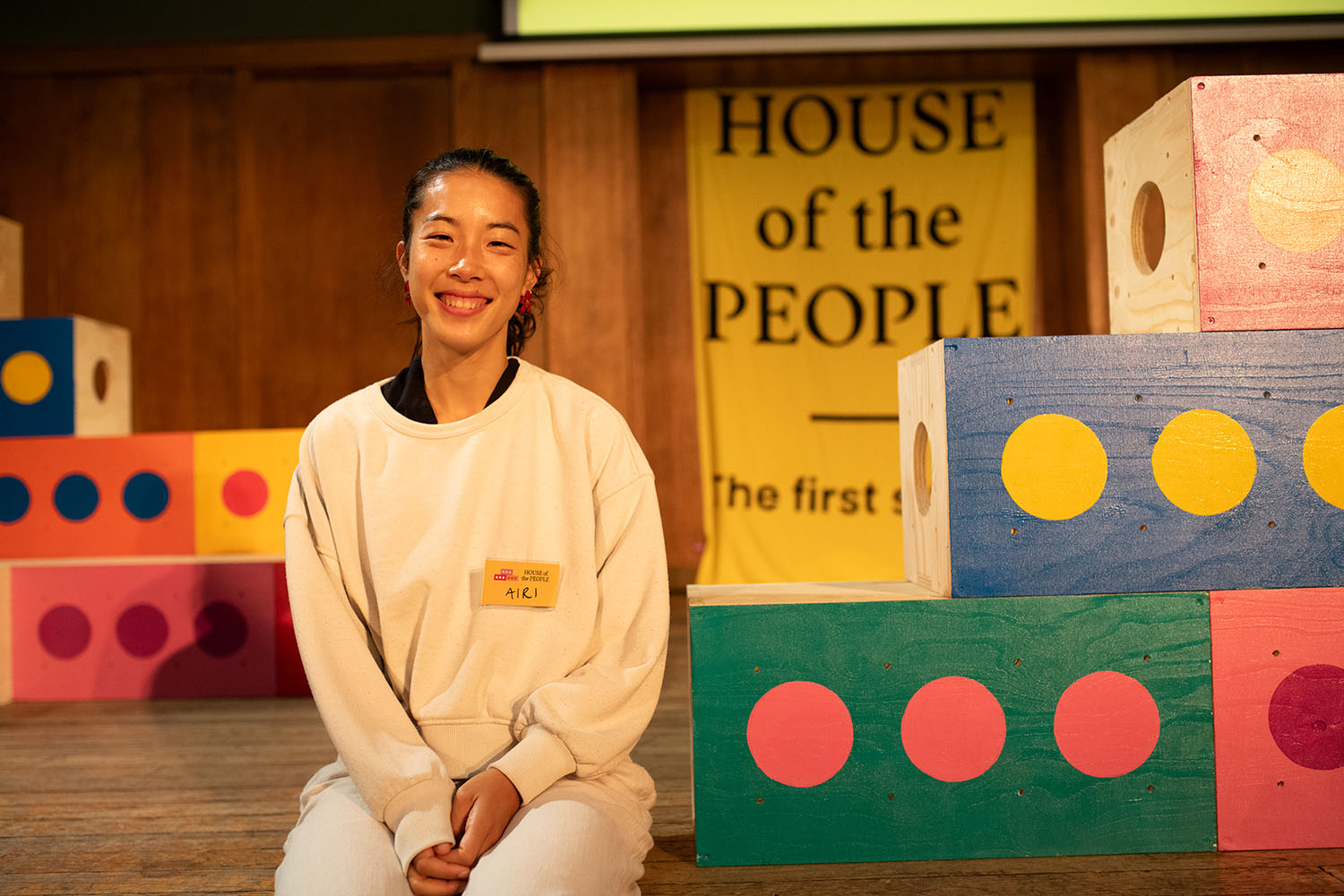
For the first time, a national grassroots movement set the programme for a Citizens' Assembly and is now championing the results. To demand change in the face of wealth inequality, genocide and climate breakdown, citizens drafted The People's Charter.
In 2024, independent candidates across England called together local communities to create manifestos and set key topics for the House of the People. In just four weeks, 32 Assemblies were held in 18 communities in the UK.
Over the past year, almost 1,000 people have taken part in 25 local Assemblies to create community charters and shape the House of the People. Together, they shared what’s broken in their communities and what needs to change in the UK.
In Hull, regular Assemblies have run all throughout the city for two years, shaped around learning and building alternatives to broken politics. Hundreds of hours were spent listening to people on the doorstep and hundreds more organising to meet local needs.
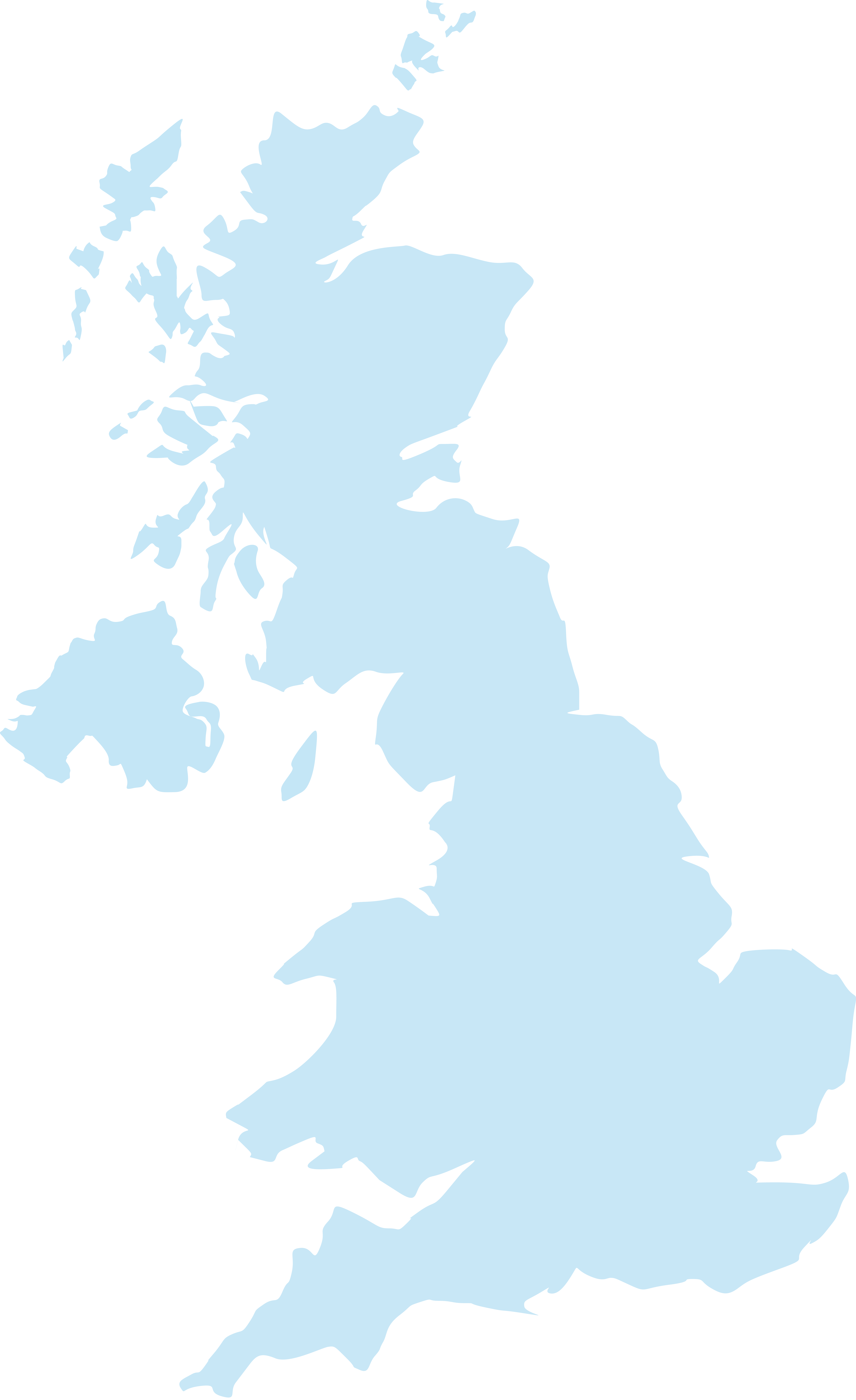
Plymouth
Wigan
Southport
Southport
Warrington North
Mid cheshire
Norwich North
Norwich North
Dudley
Birmingham [3]
Leicester East
Leicester South
Bristol
Oxford
Holborn
Ealing
Battersea
Enfield
Tottenham
Wallasey
Salisbury
Hastings
Brighton
Broxtowe
Sunderland
Bradford
Huddersfield
Belfast
Glasgow
Aberdeen
Edinbugh
Rothbury
Newcastle
Hull
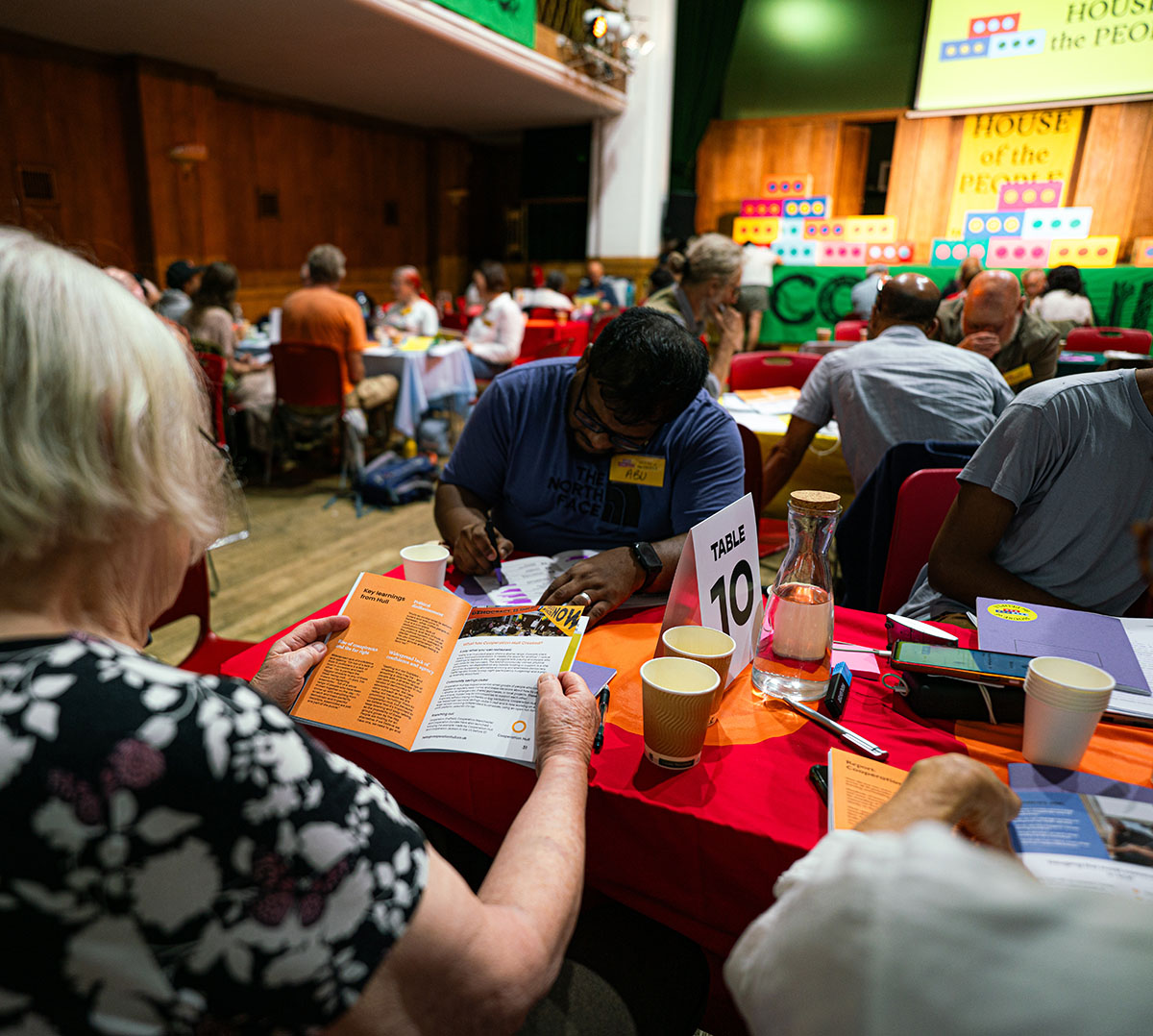
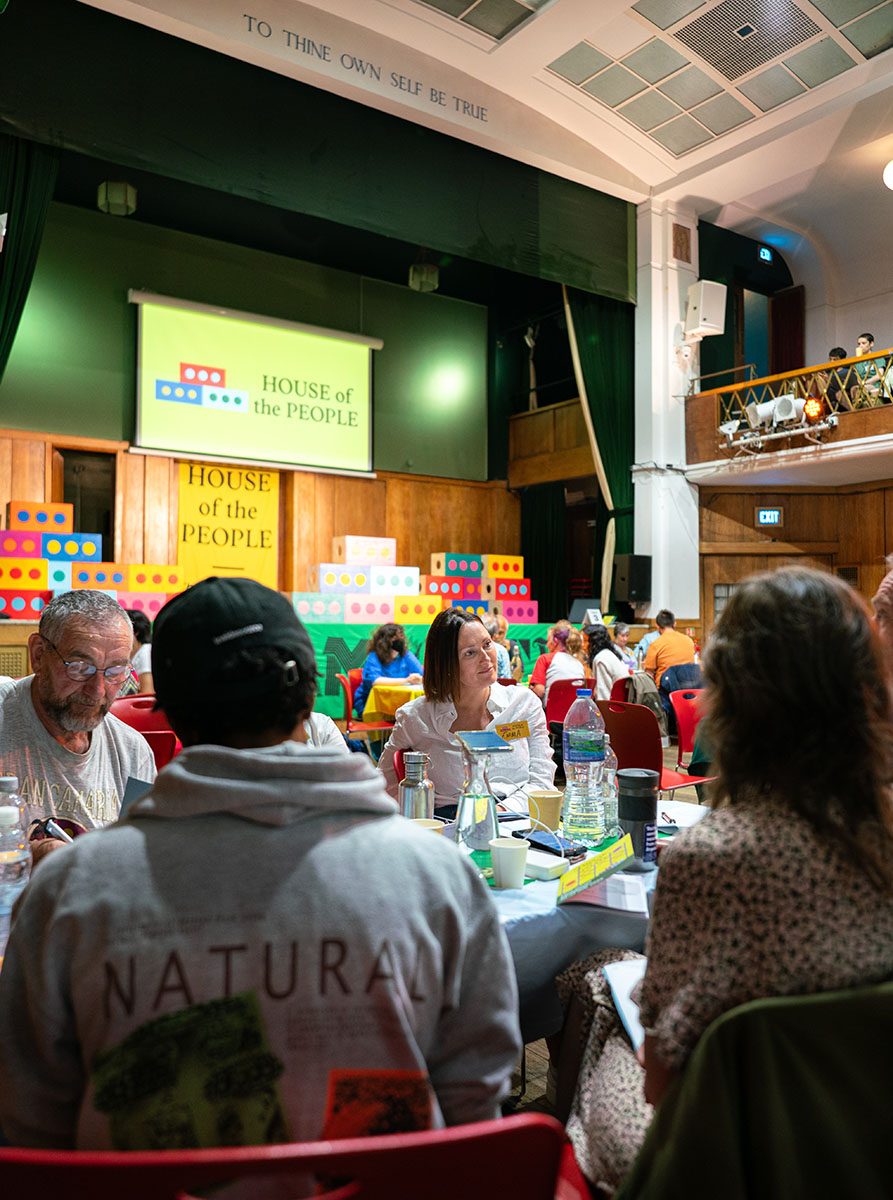
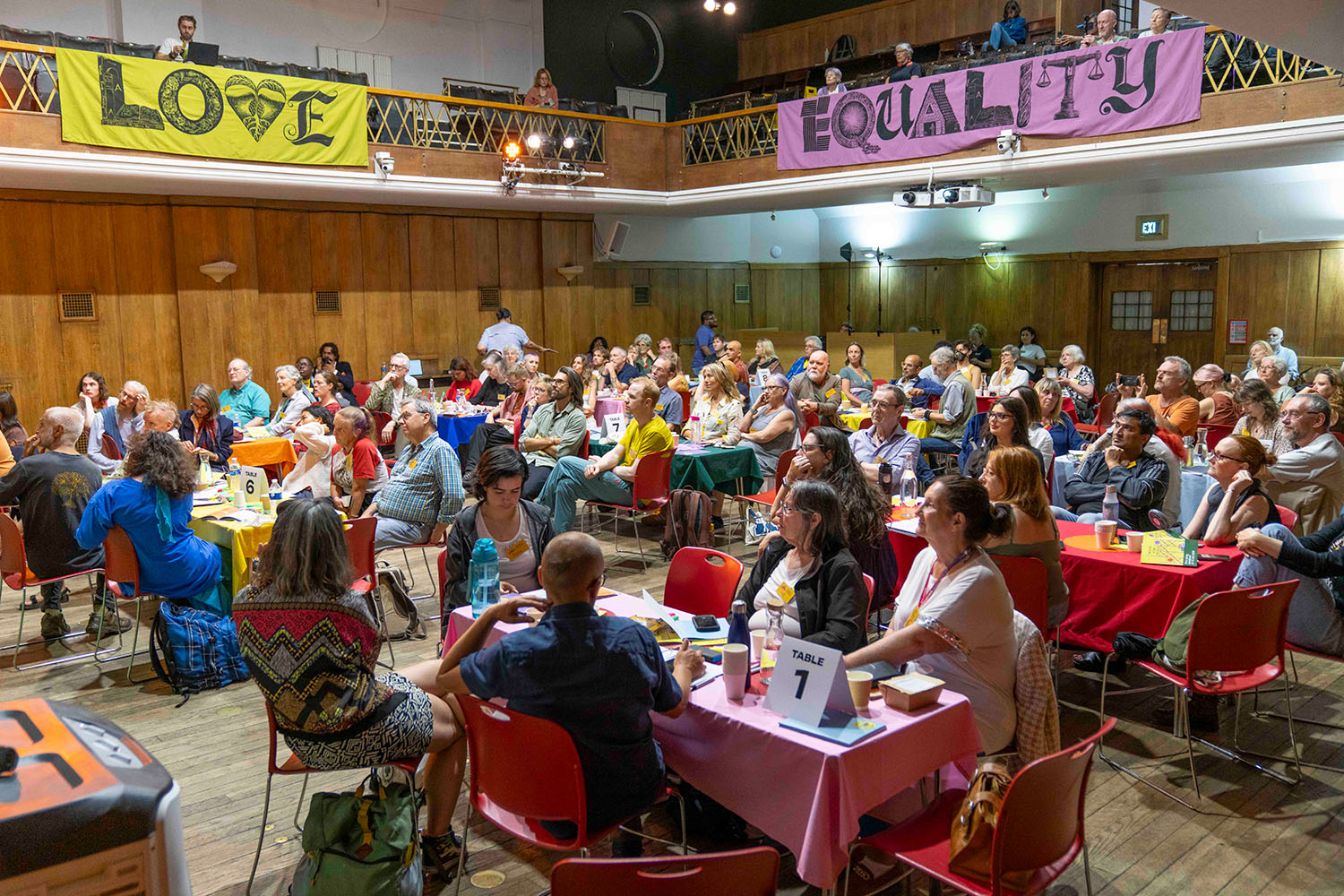
Thousands of people had their say at 75 local Assemblies across the UK, from Exeter to Dundee to Belfast to Newcastle. On the first day, the House heard from delegates and deliberated on the results.
Members agreed that we need a new system that values people and nature more than profit to help our communities thrive. By the end of the day, they had almost 60 proposals — ideas to fix things like energy bills, nature and corruption.
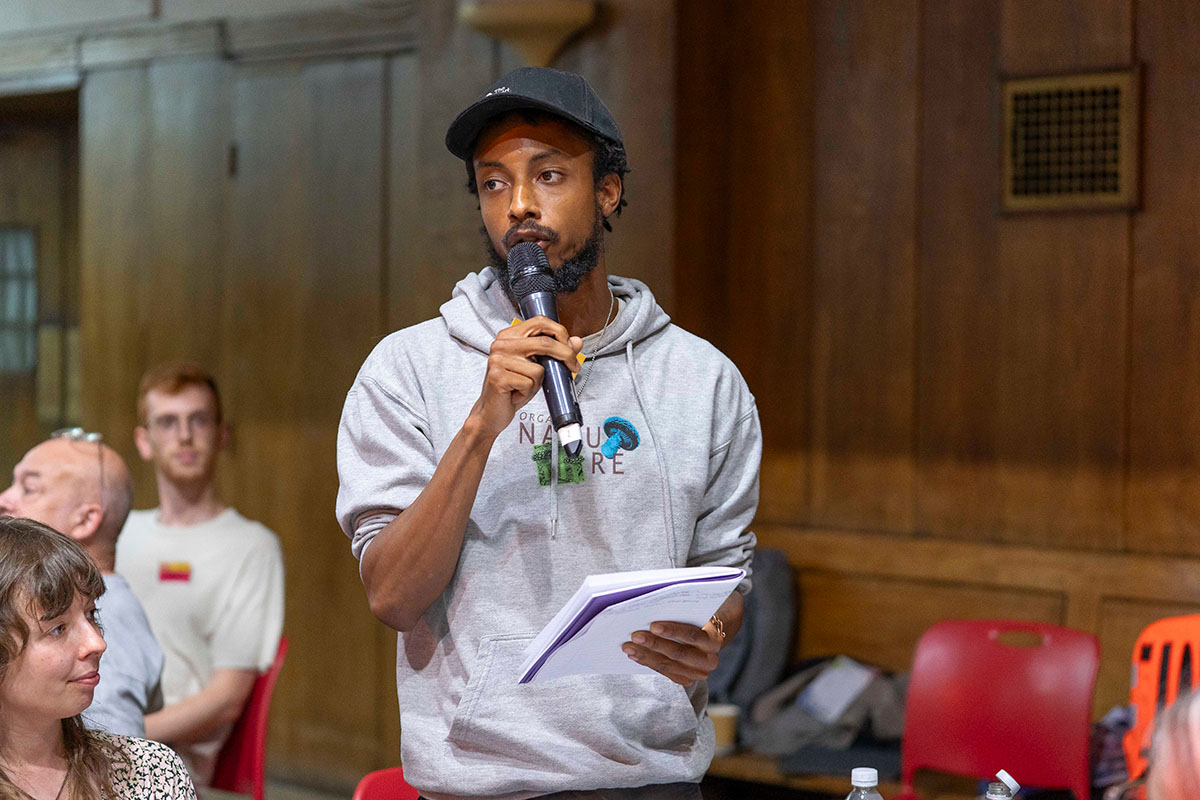
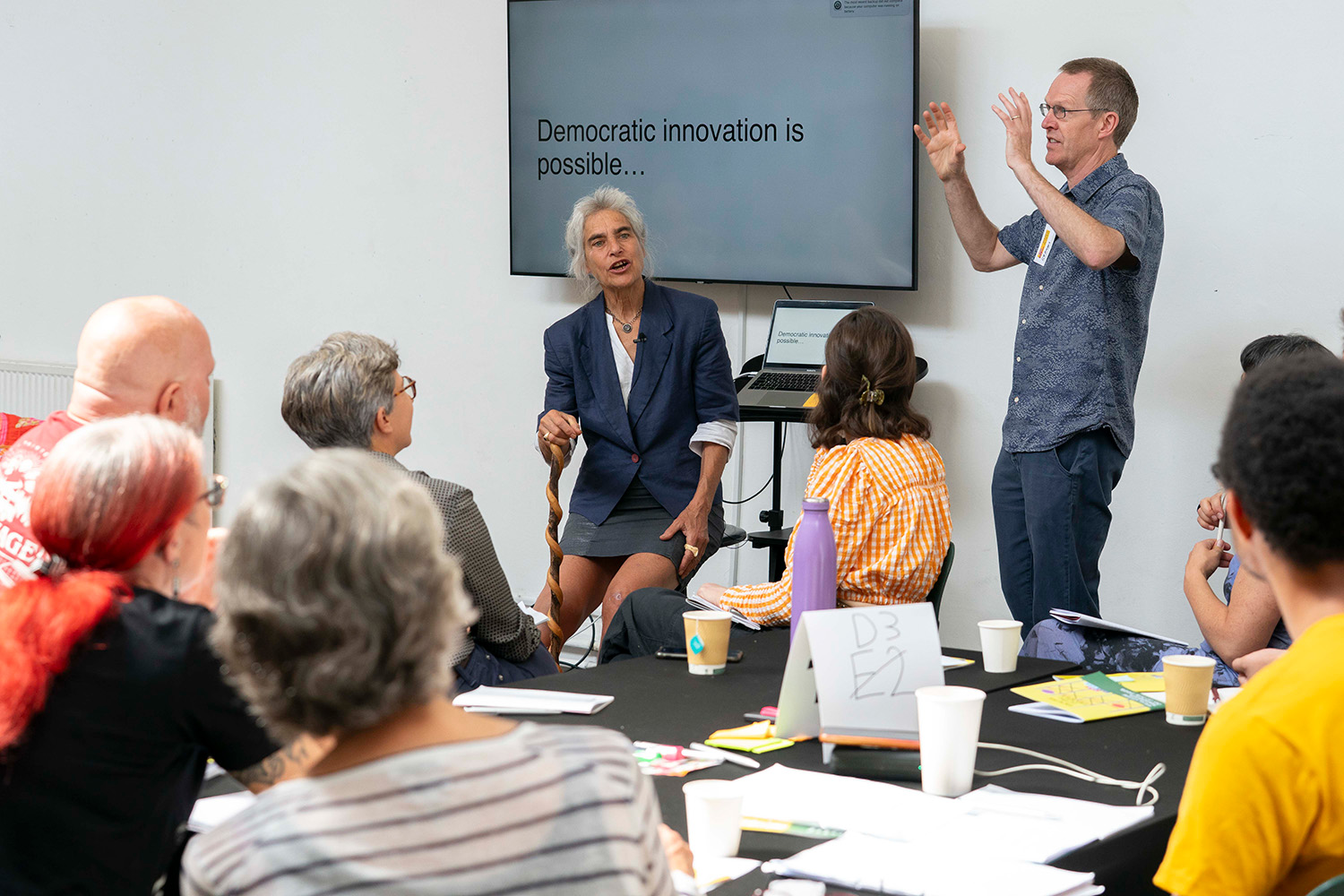
Day 2 was about getting the facts. Lead scientists, acclaimed economists, professors and historians made their case to the House on how to address the biggest issues in society: money, politics, the environment and war.
It was a day of big ideas and deep emotions. Members listened to stories about international crimes and the human cost of the climate disasters. They heard about solutions to tax wealth fairly and upgrade democracy for good. Together, they worked to combine and refine their best ideas.

On the final day, the House spent hours challenging proposals to make sure they were fair and free from pitfalls. They asked tough questions about how to tax the ultra-rich without hurting regular workers and how to ensure new green laws wouldn’t make life harder for the least fortunate.
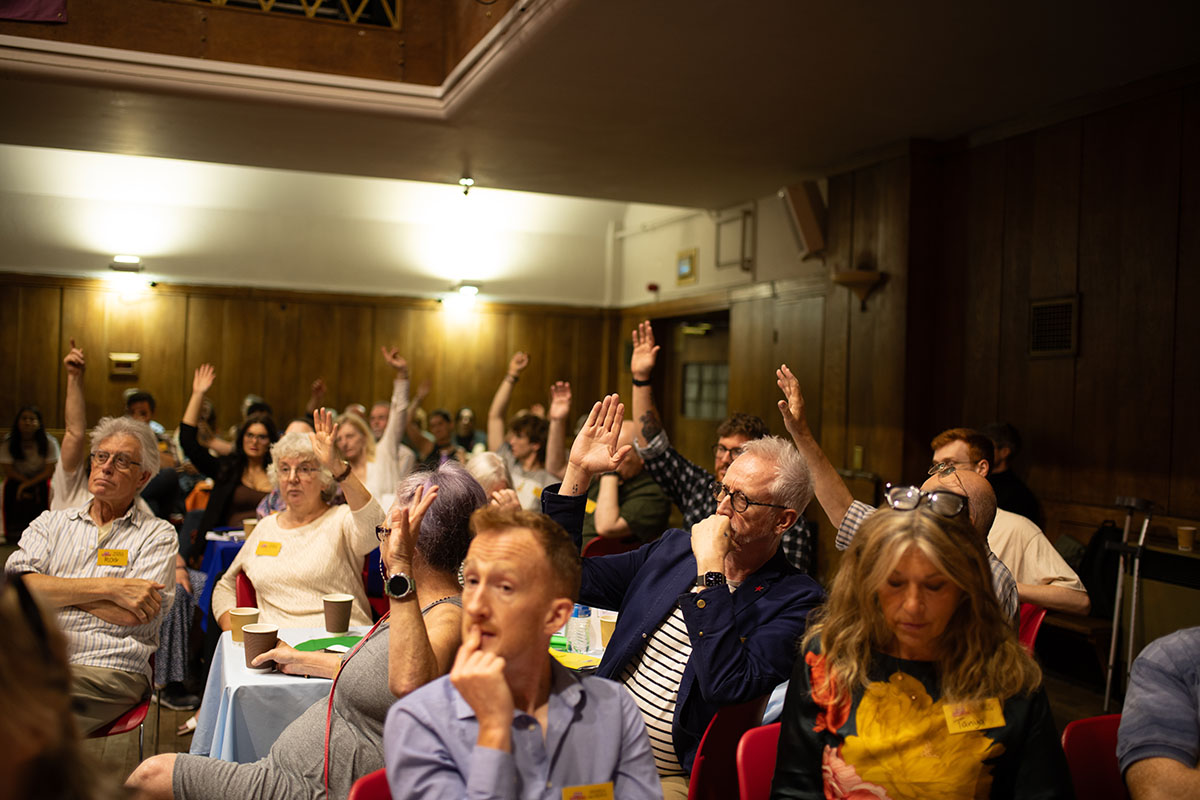
The day ended with a live vote on the final proposals for the People’s Charter. Over 85% of the House agreed on top priorities to tax wealth, provide universal basic services, empower citizens’ assemblies, cut ties with Israel and implement a first principle act to leave GDP behind and protect future generations.